Oct 15, 2026Buying Guides
waterproof-bags-materials-seams-grades-guide
What does waterproof really mean for dry bags? Compare PVC, TPU and oxford fabrics, heat-welded versus sewn seams, roll-top versus zipper closures, and IPX ratings before you order from a factory.
Waterproof-bags-materials-seams-grades-guide
What does waterproof really mean for dry bags? Compare PVC, TPU and oxford fabrics, heat-welded versus sewn seams, roll-top versus zipper closures, and IPX ratings before you order from a factory.
1. The Meaning of Waterproof Varies Completely by Product
Many buyers assume every product labeled waterproof can withstand immersion. That is not how the industry works. There are usually three levels. Water repellent means the fabric can resist light splashes only, and water will seep through after prolonged rain. Waterproof means the bag can withstand continuous spraying with well-sealed seams. Water resistant to pressure means it can tolerate short-time immersion at a certain depth. These three levels differ greatly in fabric, process and cost. Clarifying the end-user scenario is the first step in selecting the right product grade and the first step in avoiding after-sales complaints.
2. Main Fabric Comparison: PVC, TPU and Waterproof Oxford
PVC tarpaulin is the most commonly used fabric for waterproof bags. The inner mesh layer strengthens tear resistance, while the PVC coating provides waterproof performance. It is wear resistant, aging resistant and cost effective, making it ideal for rafting, beach and water sports where friction is frequent. TPU fabric is thin, soft and flexible. It stays flexible in cold temperatures and performs better in environmental compliance, which suits lightweight outdoor products where weight and hand feel matter. Waterproof oxford fabric is light and foldable, suitable for daily commuting and light rain protection, but its reliability in deep water is weaker than PVC and TPU. These fabrics can be combined, for example a PVC body with oxford straps, balancing waterproof performance and carrying comfort.
3. Seam Treatment: The Fundamental Difference Between Heat Welding and Sewing
The sealing performance of a waterproof bag mainly depends on seam treatment. Sewing leaves pinholes along the stitch line. Even if the fabric itself is waterproof, water slowly penetrates through the pinholes, so ordinary sewn bags can only be considered water repellent. Heat welding fuses the fabric into one piece under high temperature, leaving no pinholes or leak points, which is the core process of truly waterproof bags. Some composite fabrics also need tape reinforcement at stress areas. The most reliable way to evaluate a factory's waterproof capability is to request an immersion test: put weight inside the sample, submerge it for a period and check for bubbles or water entry. This test is far more convincing than any promotional wording.
4. Closure Structures: Roll-top, Waterproof Zipper and Flap
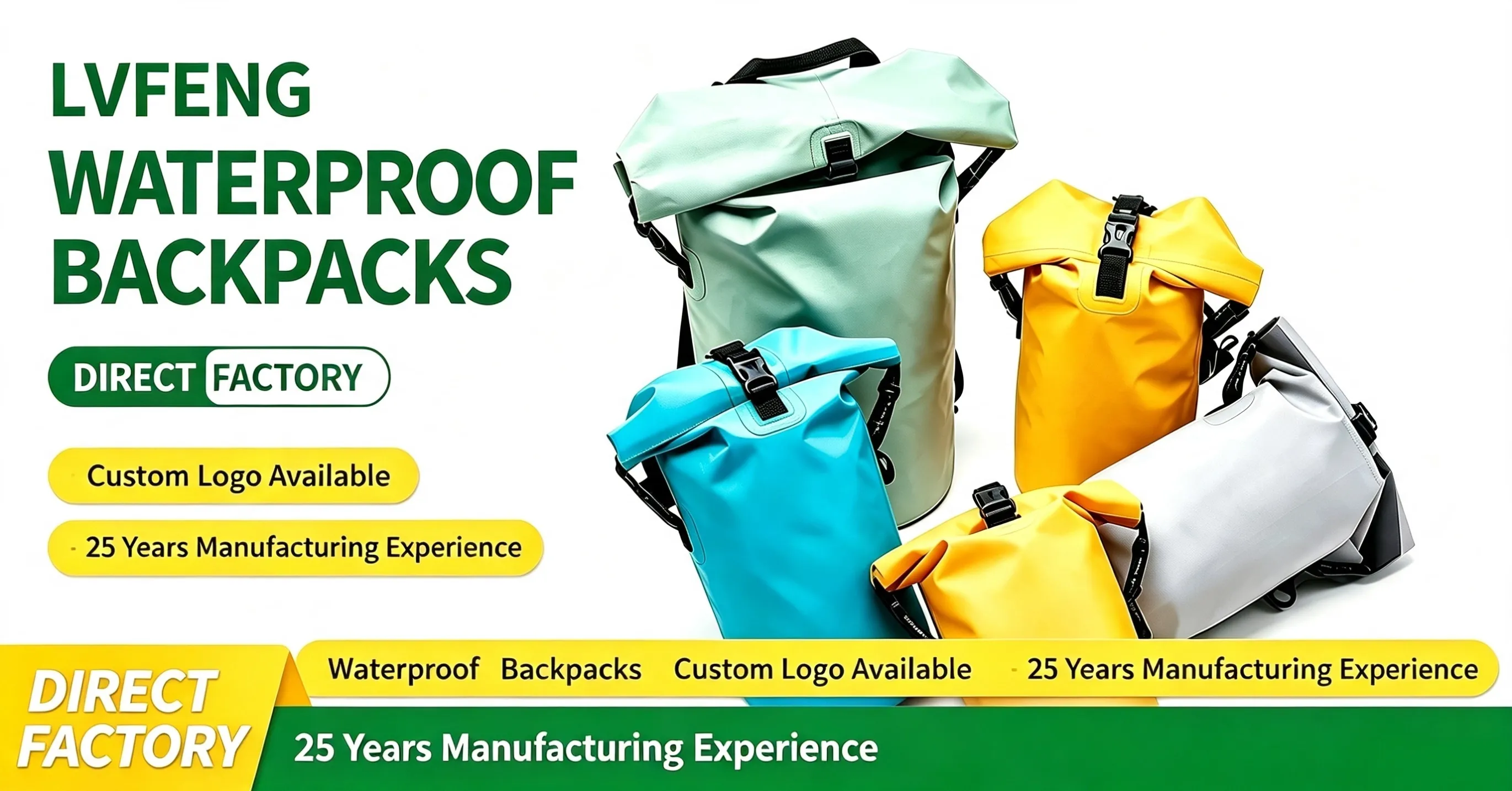
The closure structure decides both convenience and the upper limit of waterproof grade. Roll-top dry bags seal by rolling the top several times and pressing the buckle. More rolling turns mean better sealing, which suits deep water and long-time immersion, and this is the classic structure of outdoor dry bags. Waterproof zipper bags allow easier access for short trips and daily commuting, but the zipper itself is a weak point, so high-quality waterproof zippers are required. Flap and buckle closures are simple and reliable, suitable for beach bags that need quick opening. Buyers should balance usage frequency and waterproof requirements, rather than paying extra for extreme waterproof functions they will never use.
5. Waterproof Ratings: What IPX Numbers Actually Mean
Electronic products commonly use the IPX standard to measure waterproof grades, and the waterproof bag industry often borrows this concept. IPX4 means splash resistance, IPX6 means strong water spray resistance, IPX7 means short-time immersion in 1 meter of water, and IPX8 means continuous immersion. Most outdoor waterproof bags target IPX6 to IPX7. Note that rating tests usually evaluate samples under standard conditions, and the actual closure state and wear level affect real performance. When you specify the target grade during inquiry, the factory can design the structure and testing accordingly, avoiding a mismatch between product positioning and price.
6. Scenario Matching: Which Grade Sells in Which Channel
Different sales channels have clearly different needs for waterproof bags. Outdoor sports brands usually purchase IPX6 and above, focusing on fabric wear resistance and sealing reliability. Beach and pool retail channels care more about colors, capacity and price, where medium grade products are sufficient. Cross-border e-commerce sellers need attractive design and light weight for international shipping. Corporate gift orders often require brand logo printing and are more sensitive to style and packaging. When you share your sales channel and end-user scenario with the factory, it can recommend a better matching configuration, avoiding over-engineering that raises cost and under-configuring that hurts reputation.
7. Quality Testing Process on the Factory Side
A reliable factory performs systematic tests before shipment: sample immersion tests to verify sealing, tensile tests to check seam strength, print adhesion tests to confirm logo durability, and size and capacity rechecks to ensure consistency with the order. For bulk orders, third-party inspection is usually arranged before packing. Buyers can ask the factory to provide testing methods and result records. This both evaluates the factory's quality control level and establishes a clear quality benchmark for future cooperation.
8. Practical Advice for Buyers
First, do not judge quality by sample appearance alone; request an actual waterproof test. Second, clarify the target waterproof grade and usage scenario to avoid grade mismatch. Third, confirm fabric weight and structural details, because low-priced fabrics often sacrifice durability. Fourth, share your target market's environmental requirements, because PVC and TPU have different compliance rules in different markets. Fifth, run a small trial order and collect end-user feedback before scaling up, keeping risk at a controllable stage. The waterproof bag market is not won by concepts but by the long-term accumulation of sealing craftsmanship and stable quality control.