Oct 26, 2026Buying Guides
What to ask before placing an order
Important questions buyers should ask a PVC packaging factory before placing orders. Check material specs, test reports, QC rules and compliance for custom zipper bags.
Custom PVC Packaging Bags: A Sourcing Guide for Wholesale Buyers
PVC bags have a reputation problem in some markets and a practical advantage in others. For buyers sourcing cosmetic bags, swim bags, dry pouches, stationery packs, or promotional items, the useful questions are not ideological. They are specific: Which film grade suits the application? What documentation will a compliance team in California or the EU actually ask for? How much customization is realistic at a given order volume? This guide answers those questions from a manufacturer's perspective.
Material choice determines performance PVC is used for packaging because it is clear, waterproof, wipe-clean, and mechanically strong. But "PVC" alone is not a specification. Film thickness, plasticizer type, surface finish, and construction method all change how a bag performs in the hands of an end user.
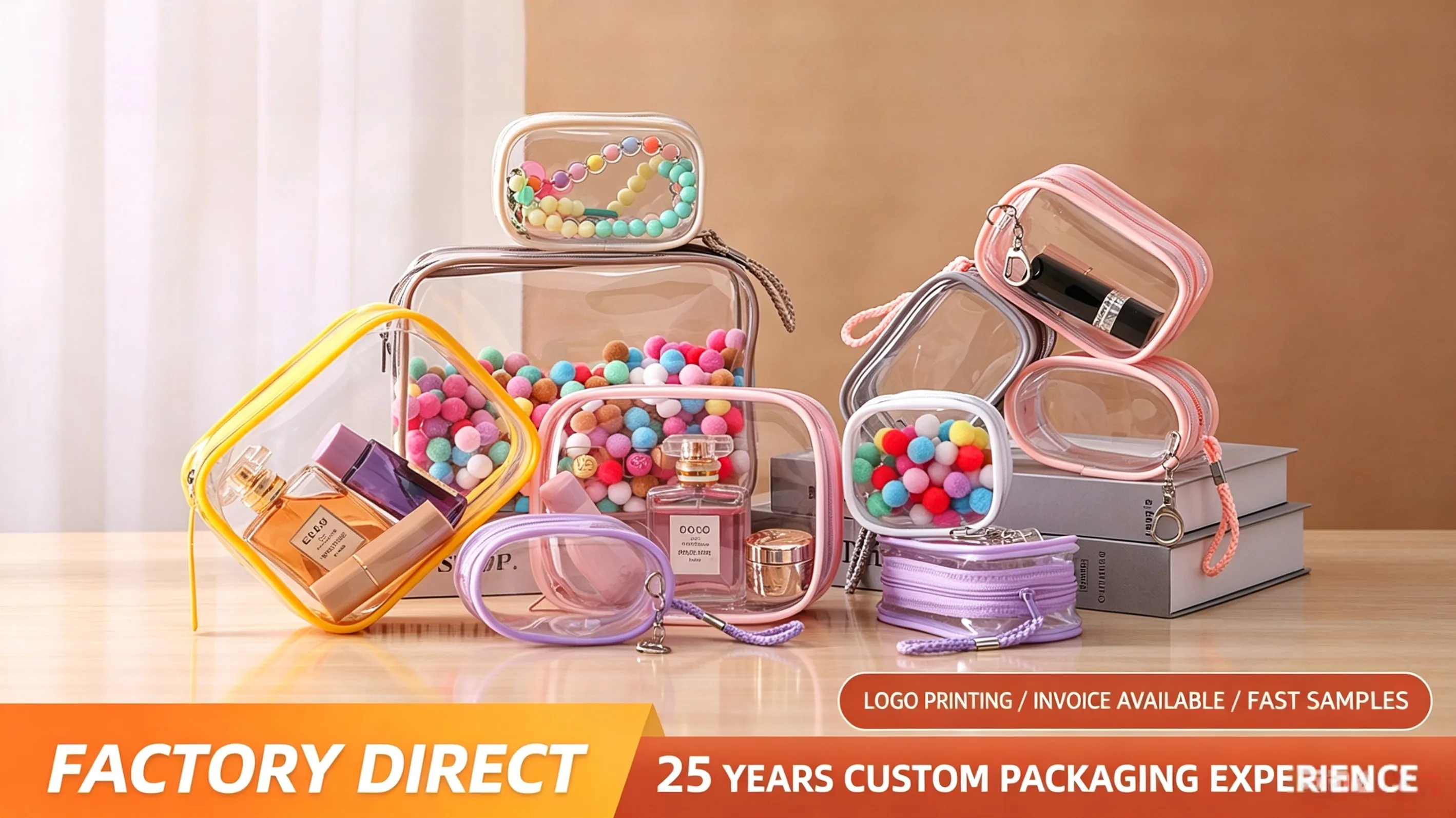
Thickness typically ranges from 0.20 mm to 0.50 mm. Light promotional pouches often sit at the lower end; cosmetic bags, swim bags, and tool pouches usually need 0.30 mm or above to hold shape and survive repeated use. Clear film shows contents well, while frosted, transparent-colored, and matte finishes support different brand positions.
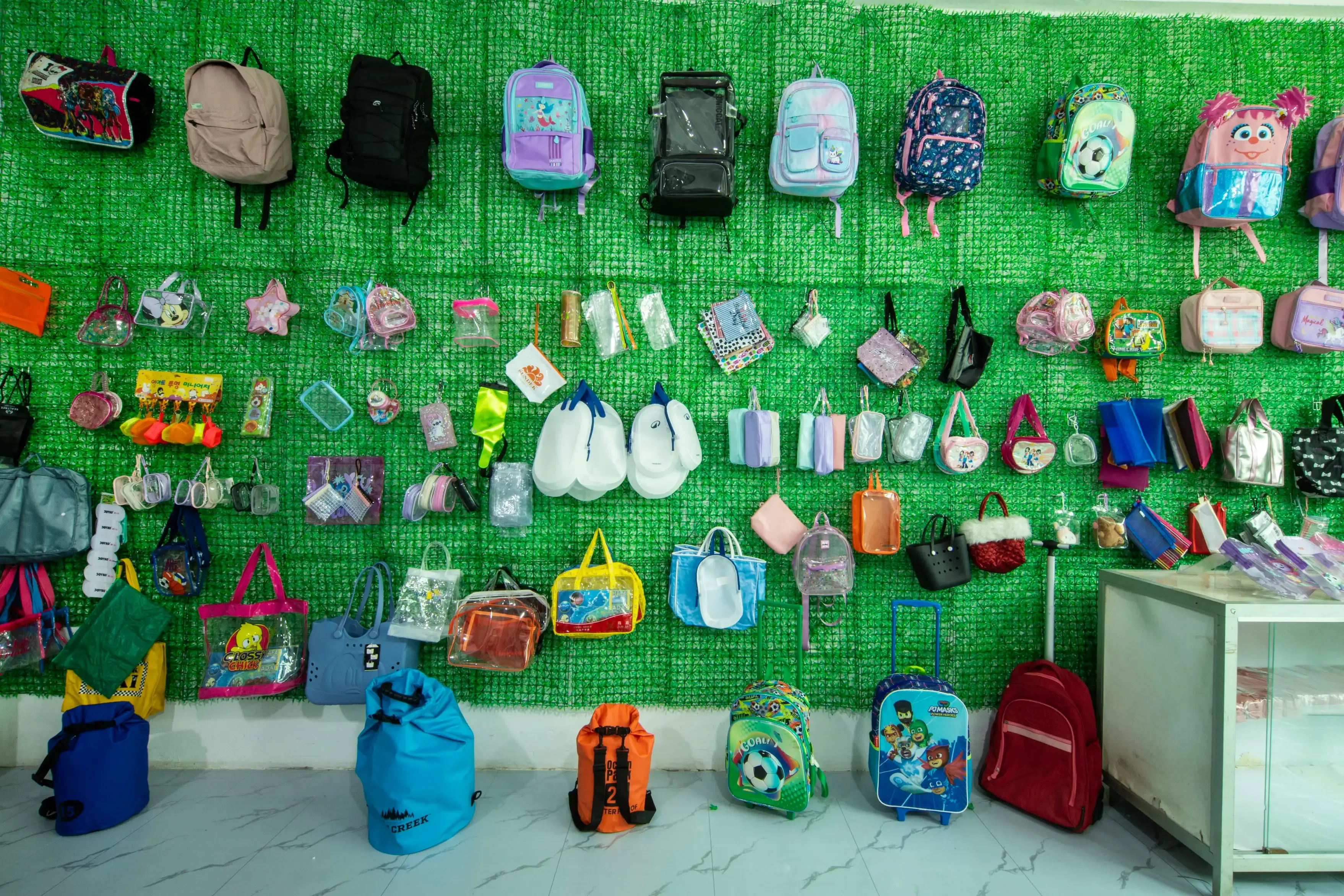
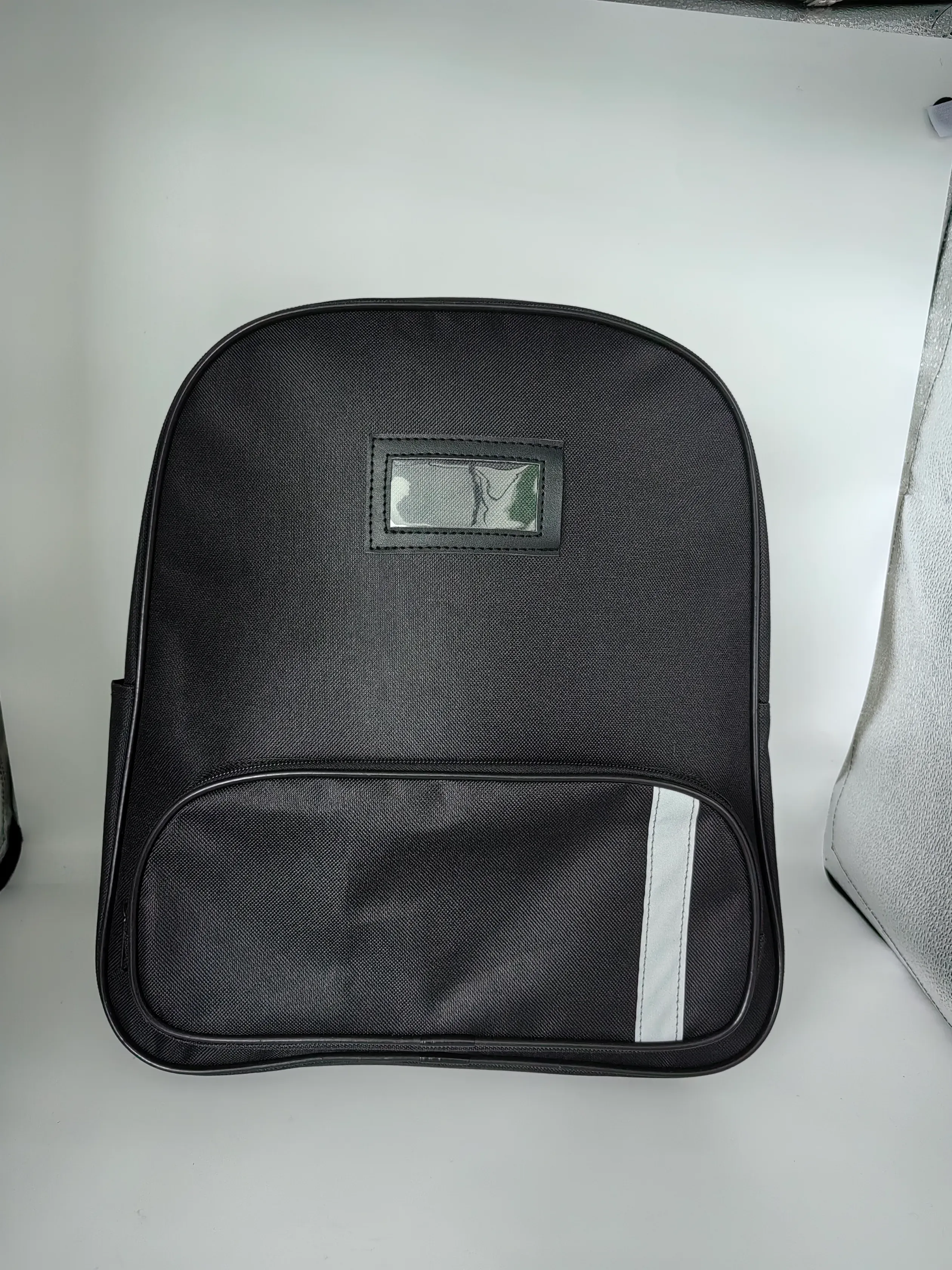
Plasticizer selection matters for compliance and for feel. Phthalate-free formulations are available and are increasingly requested by European and North American buyers. For cold-weather markets, TPU or flexible PVC compounds can reduce stiffness. Where a fabric look is required, PVC can be laminated to polyester or oxford cloth, which is common for backpacks and school bags.
Construction is where many quality problems appear. High-frequency welding gives clean, strong seams on clear PVC; stitching is used where fabric panels or handles are involved. Zipper type, slider quality, piping, binding, and handle attachment points should all be specified, not left to the factory's default. A bag that looks correct in a photo can still fail at the seam, the zipper pull, or the handle root.
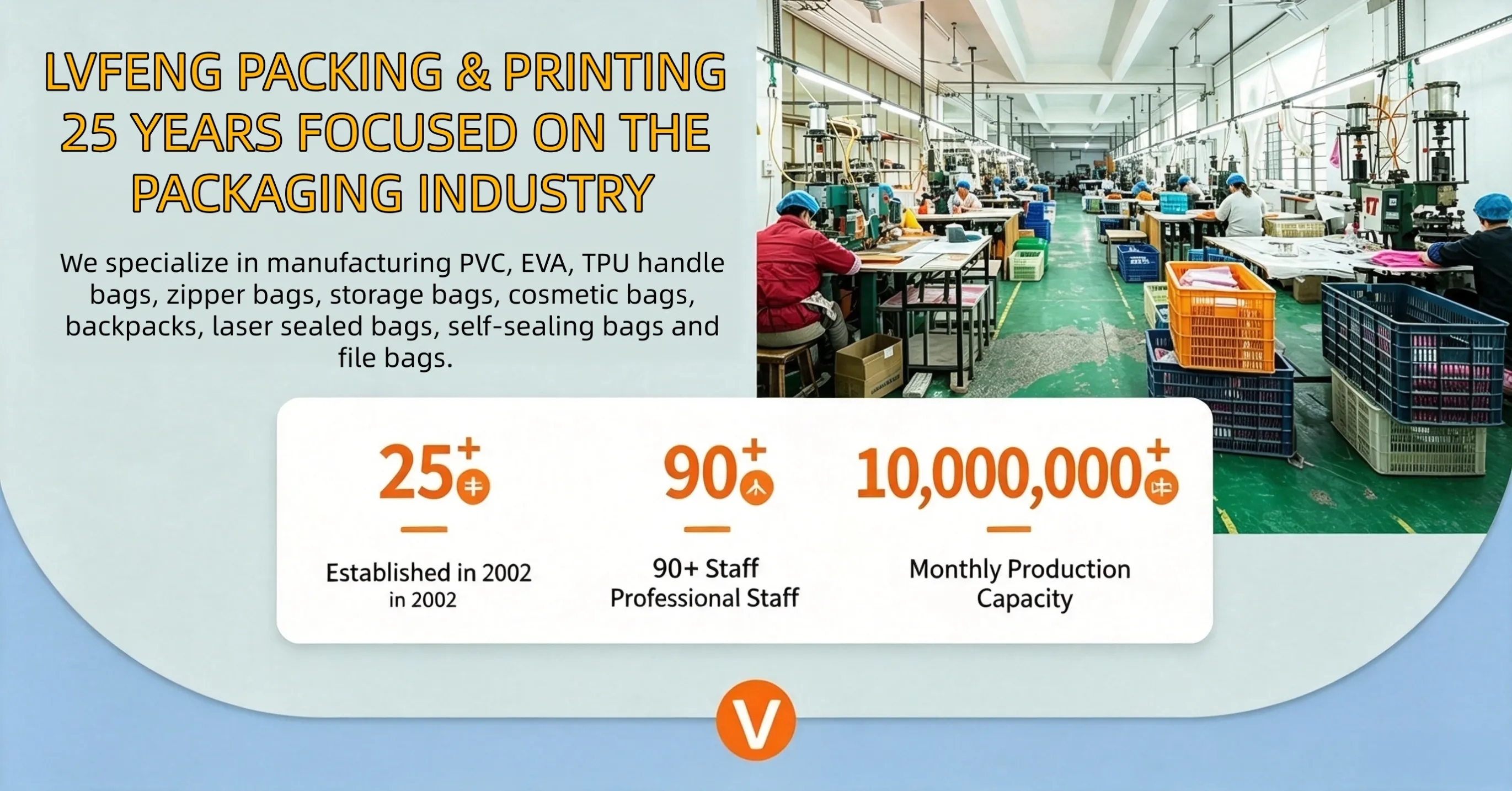
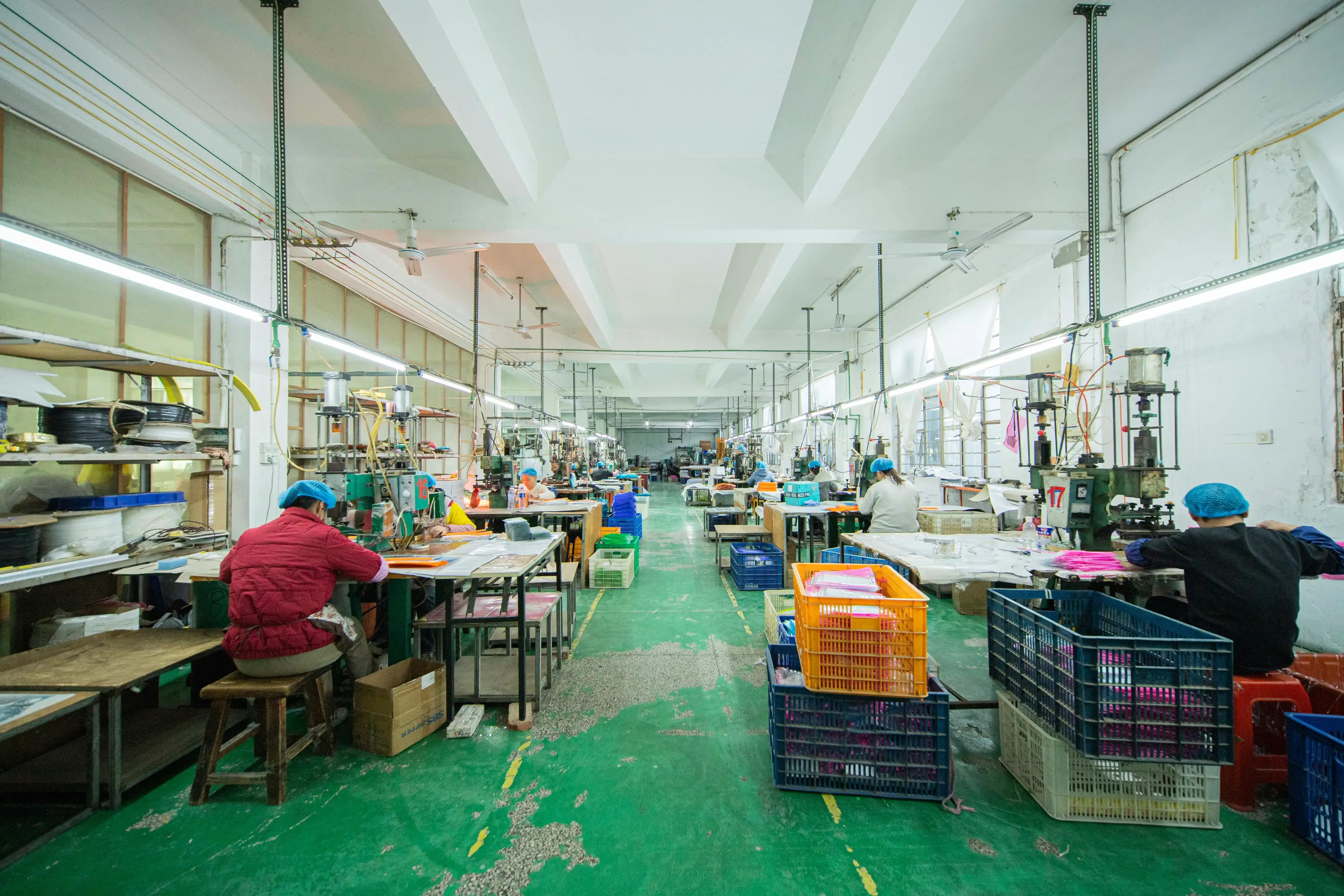
Our production process includes incoming film inspection, thickness checks, seam pull testing, color matching under D65 light, and final AQL inspection before packing. These are ordinary factory controls, but they are the difference between a sample that passes and a production run that ships without surprises.
Compliance: documentation, not a logo California Proposition 65 and PFAS are the two topics that come up most often in buyer questionnaires. Both are frequently misunderstood.
Proposition 65 is not a certification. It is a California law that requires a warning when a product exposes users to listed chemicals above defined thresholds. For PVC bags, the relevant substances usually include lead, cadmium, and certain phthalates. A supplier can address this in two ways: reformulate to stay below the applicable limits, or provide a compliant warning. Most brand owners prefer reformulation because a warning label is commercially awkward.
What buyers should request is evidence. Ask for a material declaration from the film supplier, a bill of materials covering film, ink, adhesive, zipper, and thread, and test reports from a third-party laboratory using recognized methods. Test reports should be recent and should identify the exact material and color tested. A generic certificate with no product reference is not useful.
PFAS is a family of thousands of chemicals, so "PFAS-free" needs a definition and a test basis. In practice, buyers ask for a supplier declaration plus test data, often starting with a total fluorine screening and followed by targeted testing where required. The regulatory landscape is moving: several U.S. states have adopted PFAS restrictions, the EU regulates certain PFAS under POPs and REACH, and a broader restriction is under discussion. The practical response is to control the supply chain—film, coatings, inks, and mold-release agents—and to keep batch traceability.
Depending on the destination market, buyers may also ask for REACH SVHC declarations, RoHS documentation for metal or electronic components, and food-contact documentation where the bag is intended for food use. We prepare material declarations, third-party test reports, declarations of conformity, and PFAS statements for customer compliance files, and we can provide pre-production samples for the buyer's own laboratory testing.
One point is worth stating plainly: compliance is a chain, not a single certificate. A compliant film can be compromised by an unsuitable ink or an unverified zipper. Buyers who ask for component-level declarations get a more reliable answer than buyers who accept a one-page certificate.
Customization: size, printing, and logo Most wholesale programs need more than a catalog item. Customization usually covers four areas.
Size and structure. Bags can be built to specified dimensions, with gussets, handles, windows, inner pockets, and reinforced bases. The earlier the structural requirements are shared, the fewer sampling rounds are needed.
Printing. Silk-screen printing remains the most durable option for solid spot colors and is cost-effective at volume. UV printing supports multicolor and gradient artwork. Heat transfer suits detailed designs, and digital printing is useful for short runs and market tests. Pantone matching is possible, though exact color should always be confirmed on the actual film, not on paper.
Logo and branding. A logo can be printed directly, applied as a PVC or rubber patch, embossed or debossed, mounted on a metal plate, or supplied as a woven label. Hardware—zippers, sliders, buckles, D-rings—can be color-matched where volume justifies it.
Packaging and logistics. Polybags, hangtags, barcode labels, insert cards, and master carton marks can all be customized. For retail programs, a quick check of barcode placement and carton labeling often prevents chargebacks later.
MOQs depend on construction and printing. Many custom PVC programs fall between 500 and 1,000 pieces, with lower thresholds possible for stock colors and simpler decoration. Sampling typically takes 3–7 working days after artwork approval, and production usually follows 20–30 days after sample sign-off, depending on quantity and component lead times.
What to ask before placing an order A factory visit is ideal, but a video audit and a structured questionnaire cover most of the ground. Ask for the material specification sheet, recent test reports, a physical sample, and the name of the film supplier. Ask who owns the printing screens or plates, how QC is recorded, and what happens when a batch fails inspection. Clear answers to these questions are a better signal than a long list of certificates.
If you are sourcing custom PVC packaging bags for a wholesale or private-label program, send your product type, dimensions, target thickness, estimated quantity, printing requirements, destination market, and compliance needs. We will review the specification, confirm sampling timing, and provide a quotation. Samples and a detailed quotation are available on request.